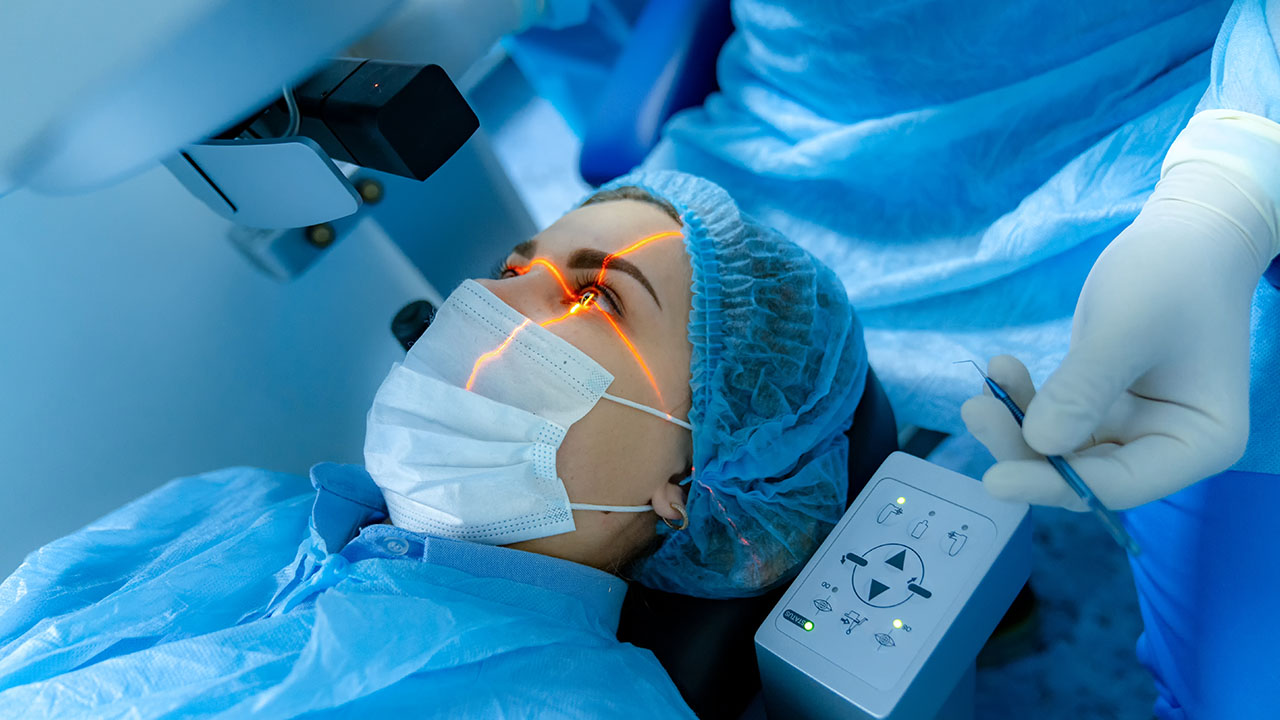
Refractive Surgery is a type of eye surgery that improves the refractive state of the eye, reducing or eliminating the need for eyeglasses or contact lenses. These procedures reshape the cornea (the clear front part of the eye) or implant artificial lenses to correct common vision problems such as nearsightedness (myopia), farsightedness (hyperopia), astigmatism, and presbyopia (age-related reading difficulty).
At Dr Jyothi's Eye Hospital in Chandanagar, Hyderabad, we specialise in advanced Refractive Surgery procedures including LASIK, PRK, SMILE, and Refractive Lens Exchange. Dr Jyothi, with her 12+ years of experience and expertise in refractive procedures, has successfully helped numerous patients achieve freedom from glasses and contact lenses.
Ideal candidates for refractive surgery typically meet the following criteria:
Refractive surgery can effectively correct several types of refractive errors:
We offer a comprehensive range of refractive surgery options tailored to your specific needs:
LASIK is the most commonly performed refractive surgery. A thin corneal flap is created using a femtosecond laser or microkeratome. The underlying corneal tissue is reshaped with an excimer laser, and the flap is repositioned. Recovery is quick, with minimal discomfort.
PRK is an alternative to LASIK for patients with thin corneas or other contraindications. The outer layer of the cornea (epithelium) is removed, and the underlying tissue is reshaped with an excimer laser. The epithelium regenerates naturally over several days.
SMILE is a minimally invasive laser procedure where a small lens-shaped piece of tissue (lenticule) is removed through a tiny incision, changing the corneal shape to correct vision. It offers faster recovery and less dry eye compared to LASIK.
RLE is similar to cataract surgery but performed on patients without cataracts. The natural lens is removed and replaced with an artificial intraocular lens (IOL) to correct refractive errors. It is ideal for patients over 45 with presbyopia or high refractive errors.
ICL involves implanting a phakic intraocular lens inside the eye without removing the natural lens. It is ideal for patients with high refractive errors who are not candidates for laser procedures.
This procedure involves implanting small, clear, crescent-shaped rings into the cornea to flatten the central corneal curvature. It is primarily used for keratoconus but can also correct mild myopia.
Before recommending refractive surgery, Dr Jyothi performs a comprehensive pre-operative evaluation to determine candidacy:
The LASIK procedure is quick, painless, and performed under local anaesthesia:
Following refractive surgery, proper post-operative care ensures optimal healing and visual outcomes:
Refractive surgery has excellent success rates, with most patients achieving 20/20 to 20/40 vision. Typical outcomes include:
At Dr Jyothi's Eye Hospital, we provide world-class refractive surgery care with a patient-first approach:
Dr Jyothi has excellent knowledge and experience in performing all types of refractive surgeries. Her expertise, combined with advanced laser technology and compassionate care, makes Dr Jyothi's Eye Hospital the preferred choice for refractive surgery in Hyderabad.
Experience freedom from glasses and contact lenses with our advanced laser vision correction procedures.
Most patients achieve significant reduction or complete elimination of dependence on eyeglasses or contact lenses after surgery.
The entire laser procedure takes only 10 to 15 minutes for both eyes, with immediate visual improvement often noticeable.
Over 95% of patients achieve 20/40 vision or better, meeting legal driving standards without glasses.
Performed under topical anaesthesia with numbing eye drops, the procedure is virtually painless and comfortable.
Most patients return to normal activities and work within 1 to 3 days after the procedure.
Competitive pricing with clear cost breakdown and flexible payment options for all refractive procedures.
Yes, refractive surgery is considered safe and effective for appropriate candidates. Modern laser technology has significantly advanced, making procedures like LASIK, PRK, and SMILE extremely precise and predictable. Over 30 million LASIK procedures have been performed worldwide with excellent safety records. However, as with any surgery, there are potential risks. Dr Jyothi will thoroughly evaluate your eyes to determine if you are a good candidate and discuss all potential risks and benefits.
Refractive surgery provides permanent correction of the vision error that was treated. However, age-related changes like presbyopia (difficulty reading after age 40) or cataracts may still develop naturally over time. Most patients enjoy excellent vision for many years without needing glasses or contact lenses. Some patients with high prescriptions may experience minor regression over time but rarely return to their original prescription.
LASIK creates a corneal flap using a femtosecond laser, then reshapes the cornea with an excimer laser. PRK removes the outer corneal layer (epithelium) instead of creating a flap, making it ideal for patients with thin corneas. SMILE is a minimally invasive procedure where a small lens-shaped piece of tissue is removed through a tiny incision. Dr Jyothi will recommend the best option based on your corneal thickness, prescription, and lifestyle needs.
Yes, refractive surgery is highly effective at correcting astigmatism. LASIK, PRK, and SMILE can all treat astigmatism by reshaping the cornea to a more spherical shape. Toric intraocular lenses used in Refractive Lens Exchange can also correct astigmatism. Many patients with astigmatism achieve excellent visual outcomes and freedom from glasses after refractive surgery.
The cost of refractive surgery varies depending on the type of procedure (LASIK, PRK, SMILE, or RLE), the technology used, and the degree of correction needed. At Dr Jyothi's Eye Hospital, we offer affordable and transparent pricing for all refractive procedures. We also offer flexible payment options. Please contact us at +91 73373 56570 for a detailed consultation and personalized quote based on your specific needs.
Temporary dry eye is common after refractive surgery, affecting about 50-60% of patients for a few weeks to months. The symptoms are typically mild and manageable with preservative-free artificial tears. Dr Jyothi evaluates dry eye before surgery and may recommend pre-treatment to minimize post-operative dryness. Most patients find that dry eye symptoms resolve completely within 3 to 6 months as the corneal nerves regenerate.